
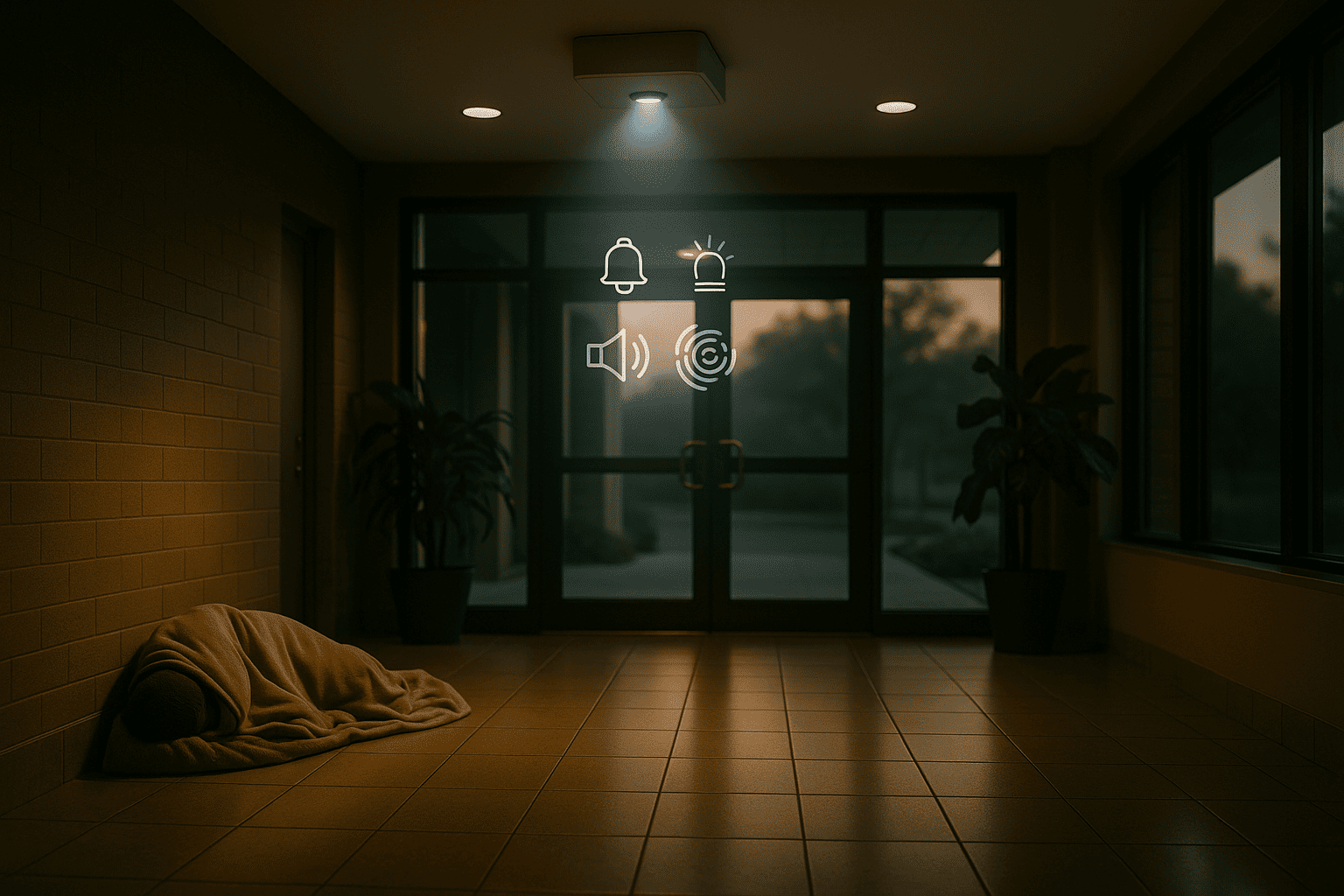
Safety Where Cameras Can’t Go
Camera-free loitering deterrence for washrooms, stairwells, and other camera-restricted spaces.
Privacy-first. No cameras. No recording.
Why Cameras Aren’t Allowed in Certain Spaces
In many environments, security cameras aren’t allowed—or they create privacy, legal, and reputational risk. LoiterGuard helps reduce these burdens with a privacy-first deterrence layer.
What Is a Camera-Free Loitering Deterrent?
A camera-free deterrent is a security approach that improves safety without recording video or identifying individuals.
LoiterGuard works by using on-device intelligence to detect lingering behavior and trigger respectful, non-confrontational deterrence—encouraging natural movement before situations escalate.
How LoiterGuard Works in Camera-Restricted Spaces
Detect
Identifies presence and lingering behavior patterns (without video or facial recognition).
Deter
Applies a respectful deterrence sequence designed to discourage prolonged loitering.
Notify
Optionally alerts staff/security only when human intervention is warranted.
Camera-Restricted Spaces LoiterGuard Supports
Common Challenges:
- Overnight presence
- Extended occupancy
- Vandalism & misuse
- Staff safety concerns
How LoiterGuard Helps:
Encourages safe turnover and maintains access while preserving dignity.
Common Challenges:
- After-hours loitering
- Smoking/drug use
- Fire safety risks
- Patrol fatigue
How LoiterGuard Helps:
Provides discreet deterrence in low-visibility areas and reduces repetitive patrols.
Common Challenges:
- After-hours use
- Unauthorized access
- Extended occupancy
How LoiterGuard Helps:
Ensures safety and deterrence without cameras, preserving privacy and trust.
Common Challenges:
- Unauthorized overnight presence
- Lingering in corridors
- Patient comfort
How LoiterGuard Helps:
Delivers camera-free deterrence in sensitive spaces with no patient data captured.
Common Challenges:
- After-hours access
- Loitering in washrooms/stairwells
- Vandalism
How LoiterGuard Helps:
Provides preventive deterrence without student monitoring, supporting staff.
Common Challenges:
- Overnight loitering
- Public safety complaints
- High patrol/response costs
How LoiterGuard Helps:
Offers scalable deterrence and reduces reliance on escalation and dispatch.
Common Challenges:
- After-hours presence
- Restricted-area access
- Limited staffing
How LoiterGuard Helps:
Delivers respectful, non-intrusive deterrence that preserves trust and dignity.
Benefits of Camera-Free Deterrence
- Improves safety without video surveillance
- Preserves privacy in high-sensitivity areas
- Reduces repetitive patrols and staff risk
- Encourages de-escalation before confrontation
- Low operating overhead and predictable cost
Frequently Asked Questions
About Camera-Restricted Spaces
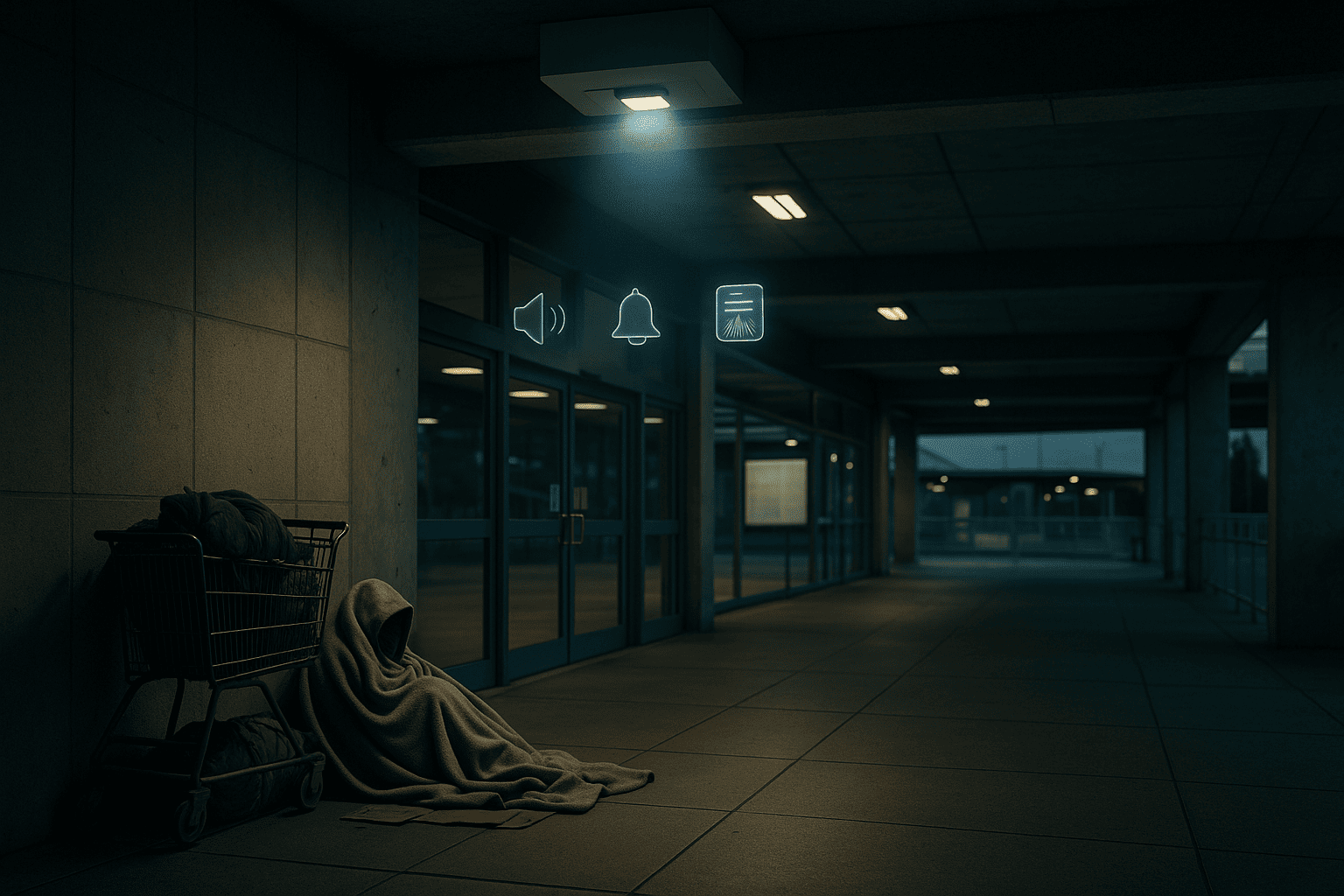
Safety Without Surveillance.
LoiterGuard helps organizations deter loitering in camera-restricted environments while preserving privacy, dignity, and trust.