Case Study
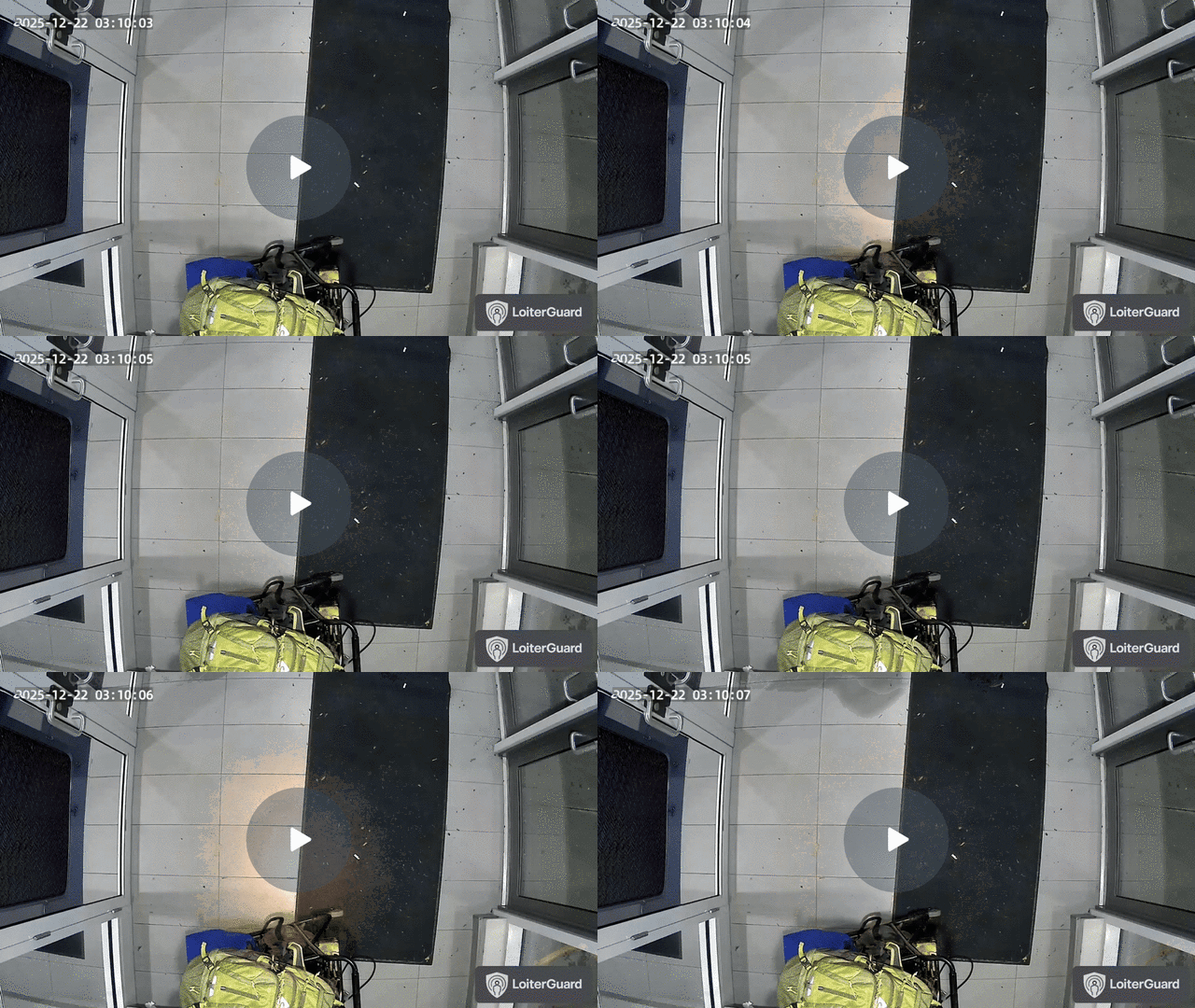
Watch Video: Niagara LoiterGuard Pilot Footage
(Audio removed and faces blurred for privacy)
Overview
A 112-unit multi-residential building in Niagara, Ontario deployed LoiterGuard to address recurring overnight loitering in its main vestibule. The property management team needed a way to keep the space clear during unattended hours - without hiring overnight guards, installing privacy-invasive cameras, or escalating incidents unnecessarily.
LoiterGuard was selected as a low-cost, autonomous deterrence layer designed specifically for after-hours, persistent presence, when traditional staffing and monitoring solutions are either impractical or cost-prohibitive.
The Challenge
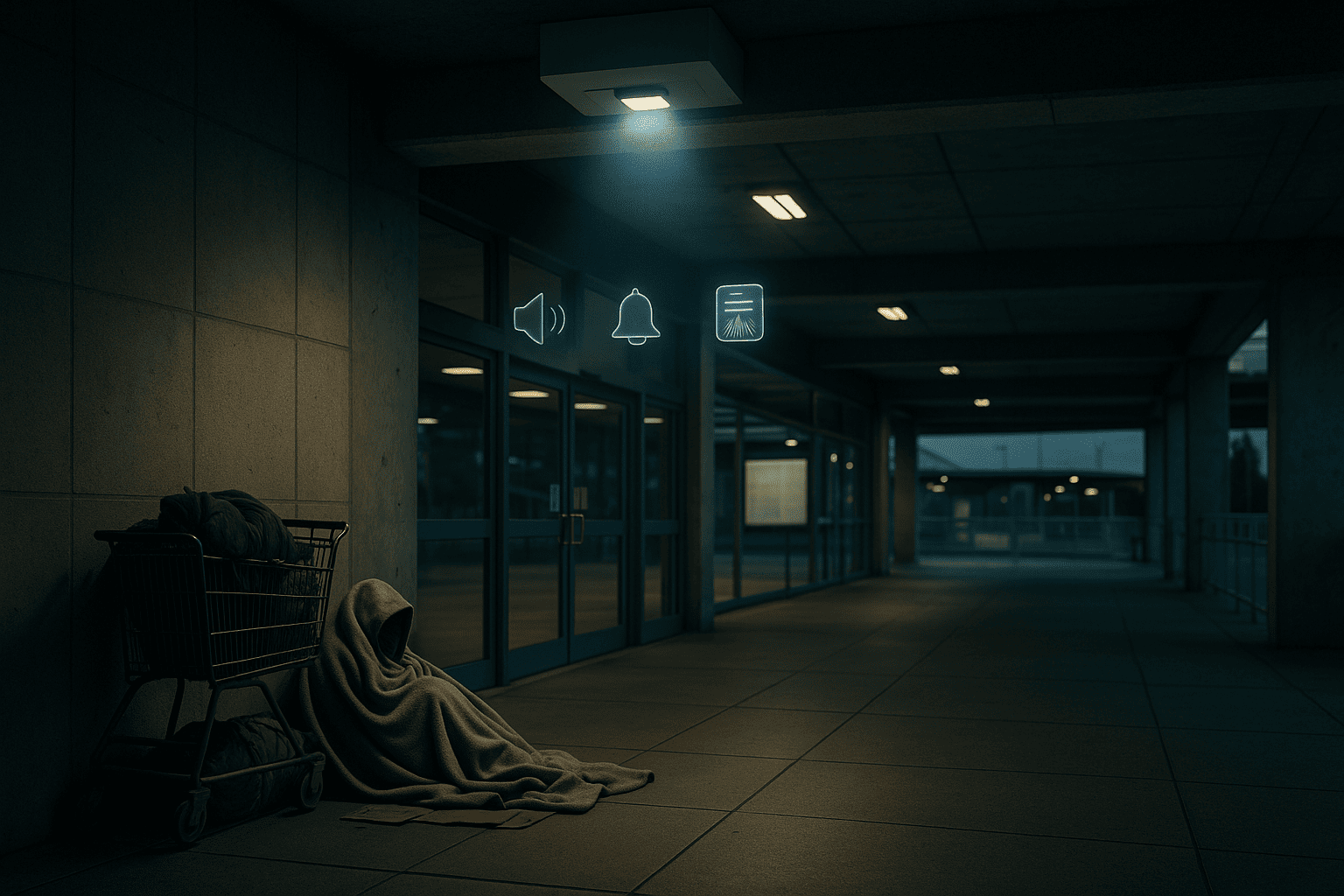
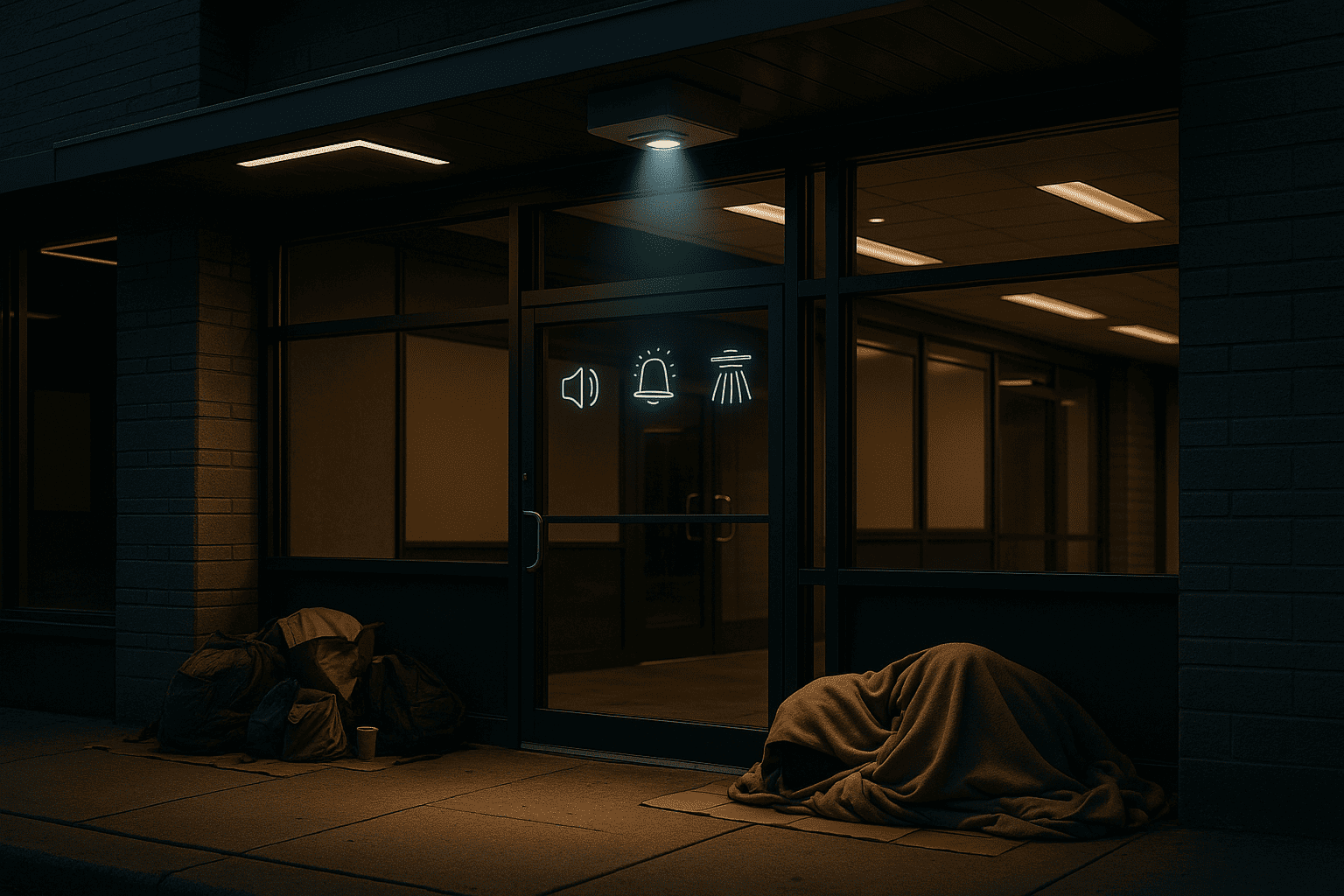
The building experienced repeated overnight incidents involving individuals sheltering in the vestibule for extended periods - most commonly between midnight and 6:00 AM.
These incidents:
- Created resident safety concerns
- Increased cleaning and maintenance costs
- Occurred when no staff or security were on site
- Were not well-suited to confrontation-based responses
Property management needed a solution that could:
- Deter true loitering, not short-term activity (deliveries, visitors)
- Operate autonomously overnight
- Avoid continuous video surveillance
- Scale cost-effectively for a single point of entry
Why Traditional Options Fell Short
24/7 Guard Patrols
- Required 7-hour overnight shifts
- Cost tens of thousands per year
- Difficult to justify for a single vestibule
- Introduced confrontation risk
AI Camera Monitoring + Remote Guard Response
- Ongoing monthly monitoring fees
- Additional per-incident guard callout and response charges, which can accumulate quickly during recurring overnight activity
- Continuous video capture raised resident privacy concerns
- Remote escalation often over-reacted to benign or short-term presence
- Overall cost structure scaled poorly for mid-size buildings, particularly for single points of entry
The board wanted a solution that resolved most incidents automatically, without human involvement.
The LoiterGuard Solution
A single LoiterGuard unit was installed in the vestibule ceiling.
Configuration
- Focused on persistent presence (7+ minutes) (Short-term activity intentionally ignored)
- Optimized for overnight operation (11 PM – 6 AM)
- Triggered LoiterGuard's proprietary graduated deterrence sequence
- Required no live monitoring
- Camera verification used only for post-incident review
The system ran fully autonomously, with telemetry logged for analysis.
What the Data Showed (60+ Days of Operation)
Key Insight: When Loitering Becomes a Real Problem
When filtering out short-term presence and focusing on 7+ minute events:
- ~27% of all 7+ minute incidents occurred overnight
- 94% of overnight 7+ minute incidents triggered deterrence
- Peak risk window: 4:00–6:00 AM
- Overnight incidents were more persistent and less likely to self-resolve
This validated what management already suspected - but had never been able to quantify.
Results
96%
Deterrence Rate (Individuals exited the vestibule without staff intervention)
99.9%
Uptime
$0
Manual Patrol Costs
Autonomous Resolution
The vast majority of incidents were resolved within minutes of deterrence activation, with no escalation required.
Why This Matters
- LoiterGuard targets the right behavior (persistent, unattended overnight presence)
- It avoids false positives from:
- Delivery drivers
- Visitors waiting briefly
- Residents entering/exiting
- Camera usage is limited and intentional, preserving privacy
- Staff are not required to respond in real time
Hard Cost Comparison
| Method | Daily | Monthly | Annual |
|---|---|---|---|
| Overnight Patrol 7-hour shift @ $28–$45/hr | $196 – $315 | $5,880 – $9,450 | $71,540 – $114,975 |
| AI Cameras + Monitoring Remote guard monitoring | $83 – $117 | $2,490 – $3,510 | $30,295 – $42,705 |
| LoiterGuard | ~$7 – $10 | ~$200 – $300 | ~$2,400 – $3,600 |
Costs estimated using Greater Toronto Area rates
Why the Building Chose LoiterGuard
- Designed specifically for overnight risk
- No continuous video monitoring
- No guards to hire or manage
- No confrontation
- Predictable, low monthly cost
- Data-backed proof of effectiveness
Key Takeaway
LoiterGuard doesn’t replace security teams - it replaces unnecessary overnight patrols and constant camera monitoring at low-risk access points.
For this Niagara building, a single autonomous unit delivered the deterrence coverage they needed - exactly when incidents were most likely to occur.
Active Pilot Deployments
Environment
Residential Condo Building
Deployment Area
Entrance Vestibule & Stairwell to Underground Garage
Status
Environment
Residential Condo Building
Deployment Area
Underground Garage Entrance + Entrance Vestibule
Status
Environment
Residential Condo Building
Deployment Area
Entrance Vestibule + Covered Side Entrance
Status
More pilots in progress. Check back soon for results.
Designed for multi-unit residential and commercial properties.
The Technology Behind the Results
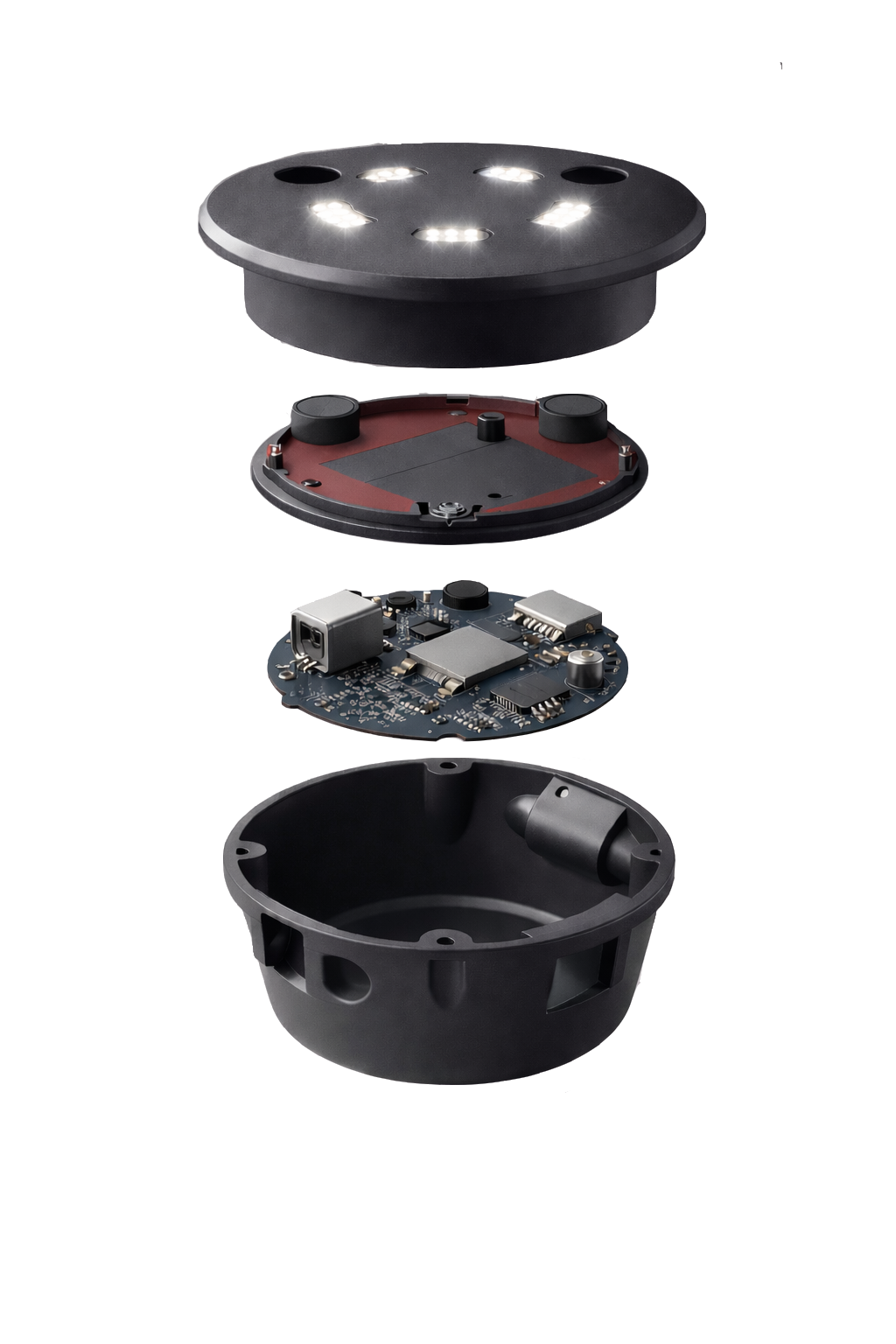
These outcomes are made possible by our privacy-first technology. LoiterGuard uses on-device intelligence and mmWave radar to detect and deter loitering autonomously, without relying on invasive cameras, costly 24/7 monitoring and expensive security patrols.
Explore the Technology