
By LoiterGuard Team on January 5, 2026
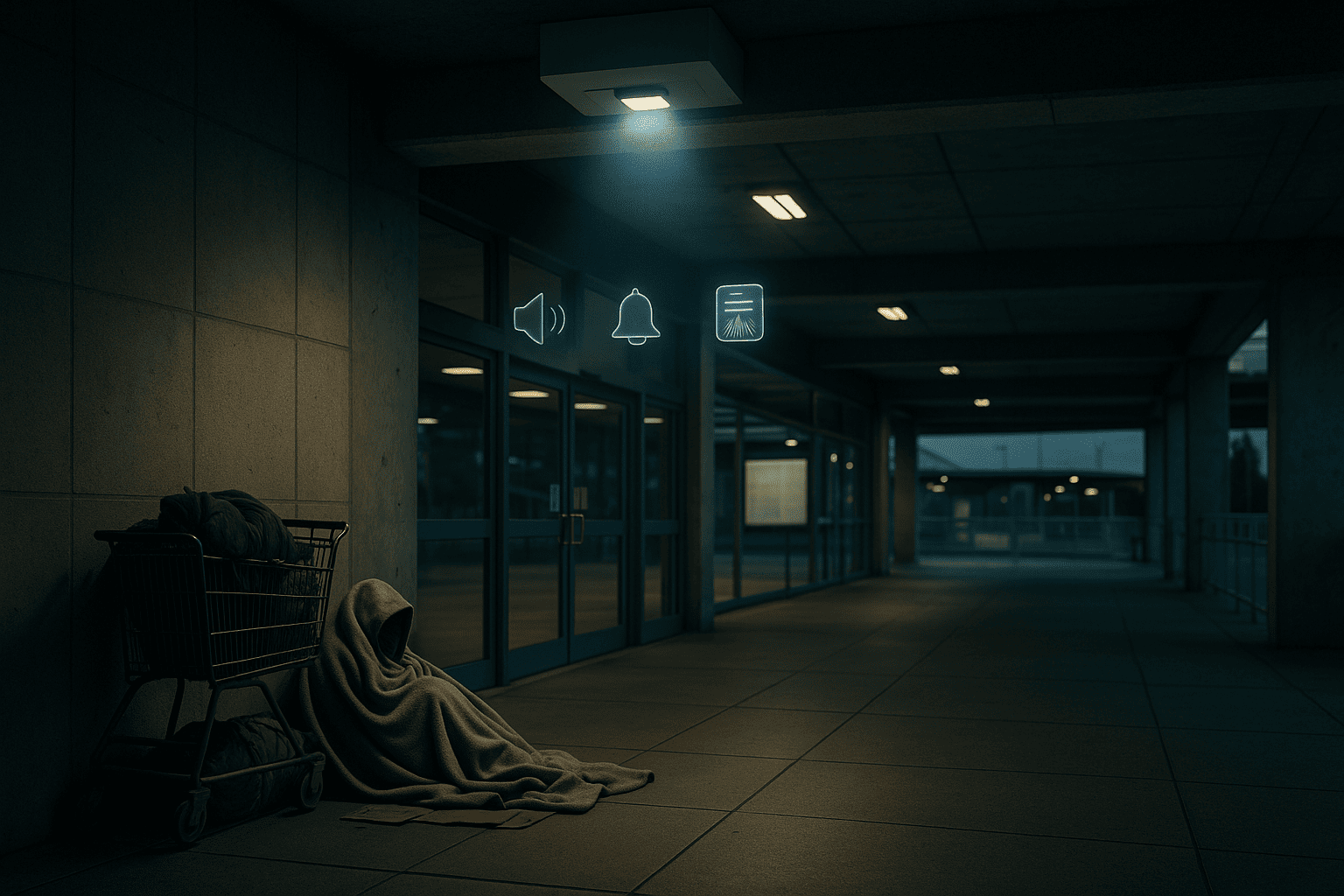
Discover how buildings manage loitering in washrooms, stairwells, and other camera-restricted spaces using privacy-first deterrence.
Many environments face a unique challenge: the need for safety and deterrence in spaces where cameras aren’t allowed.
Washrooms, stairwells, locker rooms, healthcare corridors, and certain public facilities are subject to privacy laws, ethical considerations, and policy restrictions that limit or prohibit video surveillance. Yet loitering, unauthorized presence, and misuse still occur.
Cameras are restricted in many spaces due to:
When cameras are removed from these environments, staff are often left with few alternatives beyond manual checks or reactive escalation.
Camera restrictions are common in:
These spaces are frequently overlooked in security planning - even though incidents often originate there.
Without cameras, organizations often rely on:
This approach is labor-intensive and places staff in uncomfortable or unsafe situations. It also increases the likelihood of escalation.
A camera-free deterrence system focuses on behavior patterns rather than identification:
This allows organizations to maintain safety without surveillance.
Privacy-first deterrence aligns with:
Rather than expanding surveillance, organizations can improve outcomes while preserving trust.
Security where cameras aren’t allowed does not have to mean reduced safety. With the right approach, camera-restricted spaces can be protected in a way that is respectful, effective, and sustainable.
This approach is a key part of a broader strategy for deterring loitering without cameras across an entire property.
Security patrols are expensive and inefficient at scale. Learn why patrol-only models fail - and how targeted response reduces cost and escalation.
Learn how buildings deter loitering without cameras or constant patrols. Explore privacy-first, non-confrontational alternatives to guards and surveillance.
Have a question or want to discuss how LoiterGuard can fit into your security strategy? Get in touch with our team.
Contact Us