

By LoiterGuard Team on December 15, 2025
Starting in January 2026, the City of Hamilton will begin enforcing its new Safe Apartment Buildings By-law, a sweeping initiative designed to improve safety, cleanliness, and accountability across the city’s rental housing stock.
Starting in January 2026, the City of Hamilton will begin enforcing its new Safe Apartment Buildings By-law, a sweeping initiative designed to improve safety, cleanliness, and accountability across the city’s rental housing stock.
City staff plan to evaluate approximately 900 apartment buildings by September 2027, with a strong focus on common areas, security, maintenance practices, and tenant responsiveness. For owners and operators of multi-unit residential buildings, this marks a fundamental shift from complaint-based enforcement to proactive inspections.
For buildings that are prepared, this is an opportunity to demonstrate leadership and compliance. For those that aren’t, the risk of failed evaluations, audits, penalties, and reputational damage is very real.
The Safe Apartment Buildings By-law (By-law 24-054) applies to purpose-built rental apartment buildings in the City of Hamilton that have:
The program requires annual registration, detailed operational plans, record-keeping, and city-led evaluations of building conditions - particularly in shared spaces like vestibules, hallways, stairwells, elevators, and garbage areas.
Unlike traditional enforcement models, Hamilton’s approach emphasizes proactive inspections, meaning buildings can be evaluated even if no tenant complaints have been filed.
The full legal framework is defined in the City’s Safe Apartment Buildings By-law 24-054.
Under the new program, inspections and evaluations focus heavily on common areas, not individual suites. This includes:
Inspectors assess whether common areas are:
Examples include:
A failure in common-area security can directly affect a building’s evaluation score.
Owners must maintain and document:
Garbage rooms and chute areas receive particular scrutiny due to their impact on hygiene, pest activity, and fire risk.
The by-law requires formal systems for:
Security-related issues - such as unauthorized access, broken entry systems, or unsafe conditions - are considered urgent requests and must be addressed quickly.
Owners must be able to produce:
Missing documentation can be just as damaging as unresolved issues.
One of the most significant shifts in Hamilton’s new framework is its emphasis on shared spaces rather than in-suite conditions.
Vestibules, stairwells, and parking areas are often:
These spaces are also where issues like:
tend to occur - sometimes long before staff or security teams are alerted.
From a compliance perspective, this creates a risk: problems that go undetected can still result in failed evaluations.
Historically, many buildings relied on:
Hamilton’s new approach effectively raises the bar. Property owners are expected to demonstrate control and oversight, not just respond after issues escalate.
That’s where proactive monitoring becomes critical.
LoiterGuard was designed specifically for multi-unit residential common areas - the exact spaces targeted by Hamilton’s by-law.
Without using cameras or 24/7 human monitoring, LoiterGuard helps buildings:
This directly aligns with the by-law’s goals around:
Rather than replacing property managers or security teams, LoiterGuard acts as a continuous background layer of protection - especially valuable in buildings with limited staffing coverage.
With:
many Hamilton landlords and operators are choosing to get ahead of compliance rather than scramble after a failed evaluation.
Early adopters benefit from:
Most importantly, proactive compliance reduces risk - financial, operational, and reputational.
Hamilton’s Safe Apartment Buildings By-law represents a meaningful shift in how rental housing is regulated. The focus is clear: safe, clean, secure common areas - and accountability to prove it.
For property owners and managers, success under this framework depends on visibility, responsiveness, and proactive control of shared spaces.
LoiterGuard was built for exactly this moment.
If you operate apartment buildings in Hamilton or across Ontario and want to understand how LoiterGuard fits into modern compliance strategies, explore our case studies or join the waitlist to see how proactive deterrence works in real buildings.
Discover how buildings manage loitering in washrooms, stairwells, and other camera-restricted spaces using privacy-first deterrence.
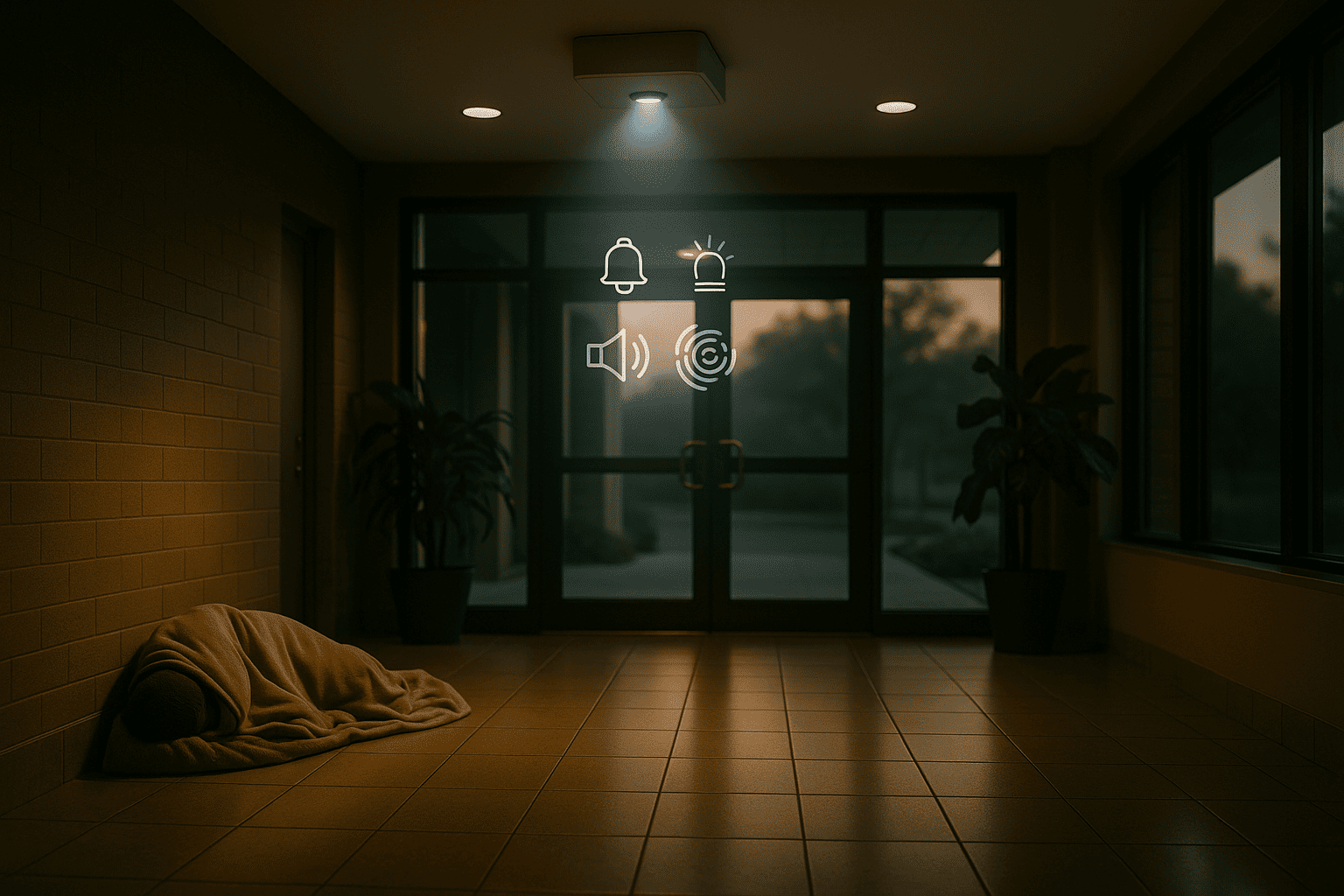
Learn how buildings deter loitering without cameras or constant patrols. Explore privacy-first, non-confrontational alternatives to guards and surveillance.
Have a question or want to discuss how LoiterGuard can fit into your security strategy? Get in touch with our team.
Contact Us