
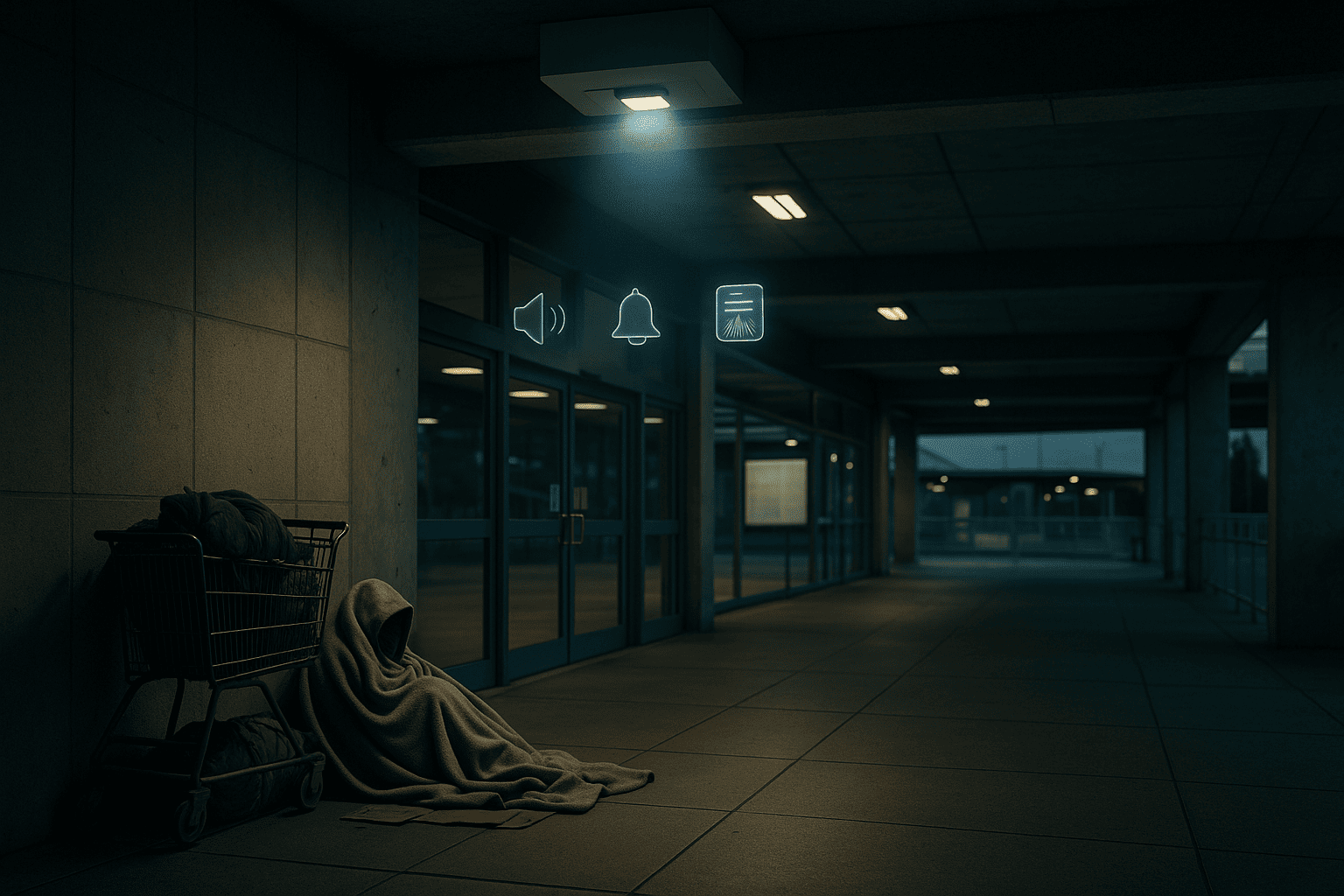
By LoiterGuard Team on November 8, 2025
Why more cameras don’t always mean more safety. Explore how de-escalation and privacy-first deterrence improve outcomes in shared spaces.
For years, surveillance has been the default approach to building safety. Cameras promised visibility, accountability, and control.
Today, many organizations are rethinking that model.
Surveillance-heavy environments can lead to:
In shared spaces, constant monitoring can erode trust.
De-escalation focuses on:
This approach aligns with how people actually behave in shared environments.
Effective de-escalation systems:
They prioritize outcomes over observation.
Privacy-first approaches:
They reflect changing expectations around safety and dignity.
The future is not more surveillance - it’s better design.
By shifting from surveillance to de-escalation, organizations can create safer shared spaces that work for everyone.
This philosophical shift is at the heart of modern solutions designed to deter loitering without cameras or guards, creating safer and more respectful environments.
Starting in January 2026, the City of Hamilton will begin enforcing its new Safe Apartment Buildings By-law, a sweeping initiative designed to improve safety, cleanliness, and accountability across the city’s rental housing stock.
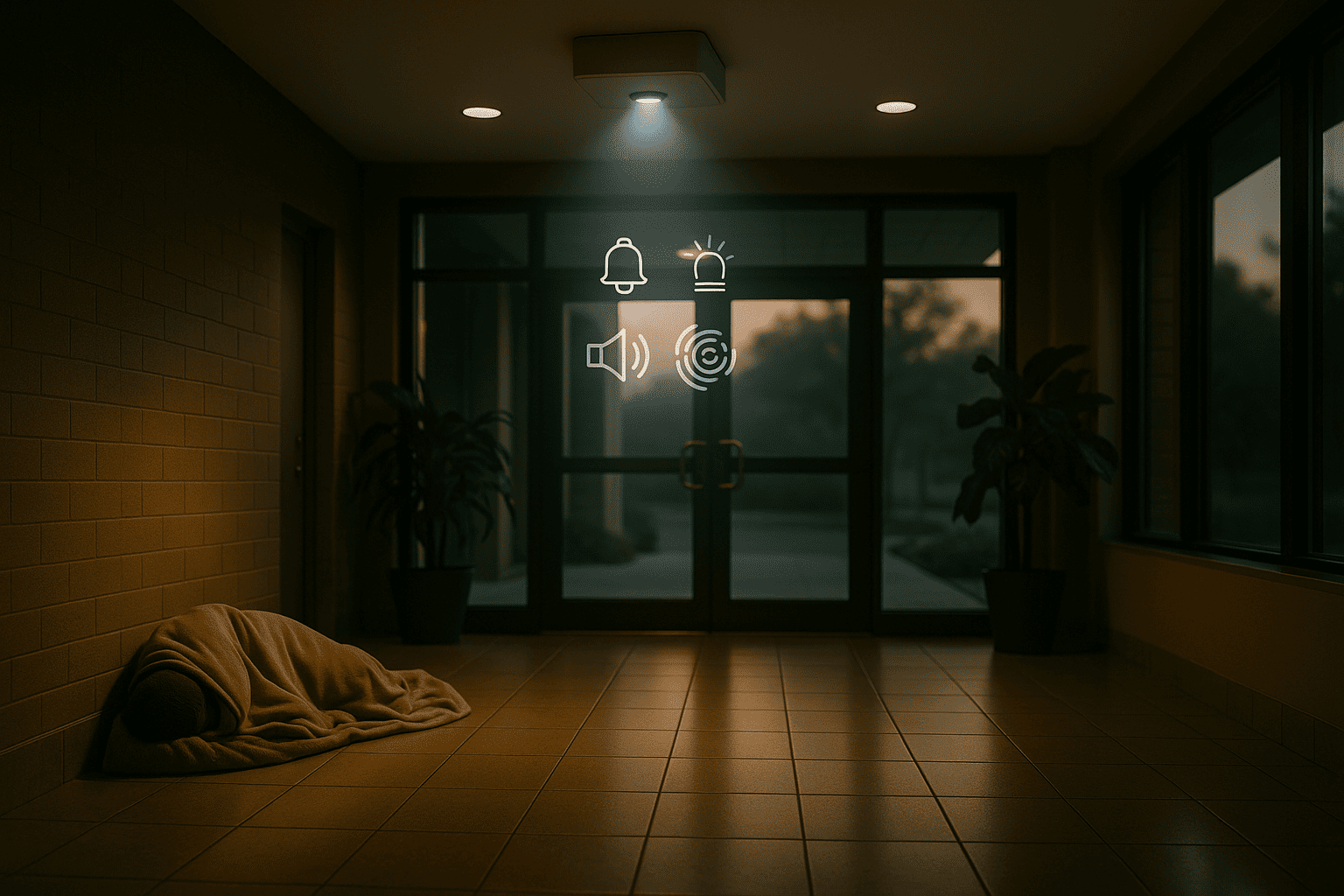
Learn how buildings deter loitering without cameras or constant patrols. Explore privacy-first, non-confrontational alternatives to guards and surveillance.
Have a question or want to discuss how LoiterGuard can fit into your security strategy? Get in touch with our team.
Contact Us